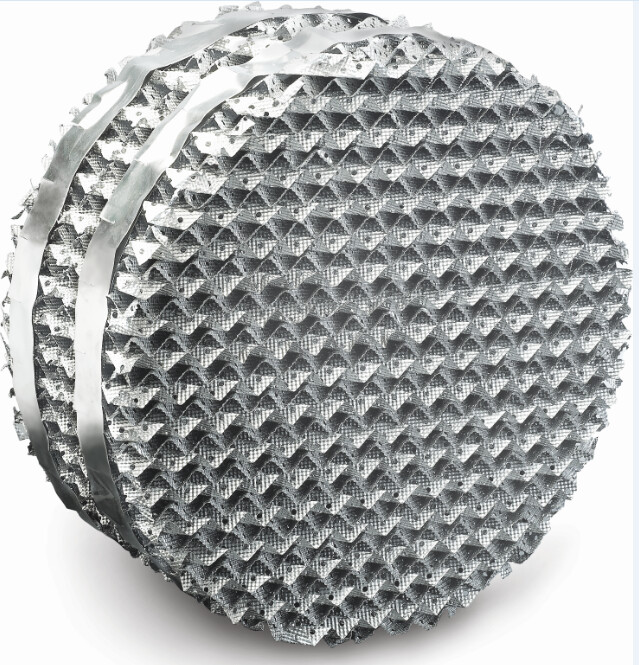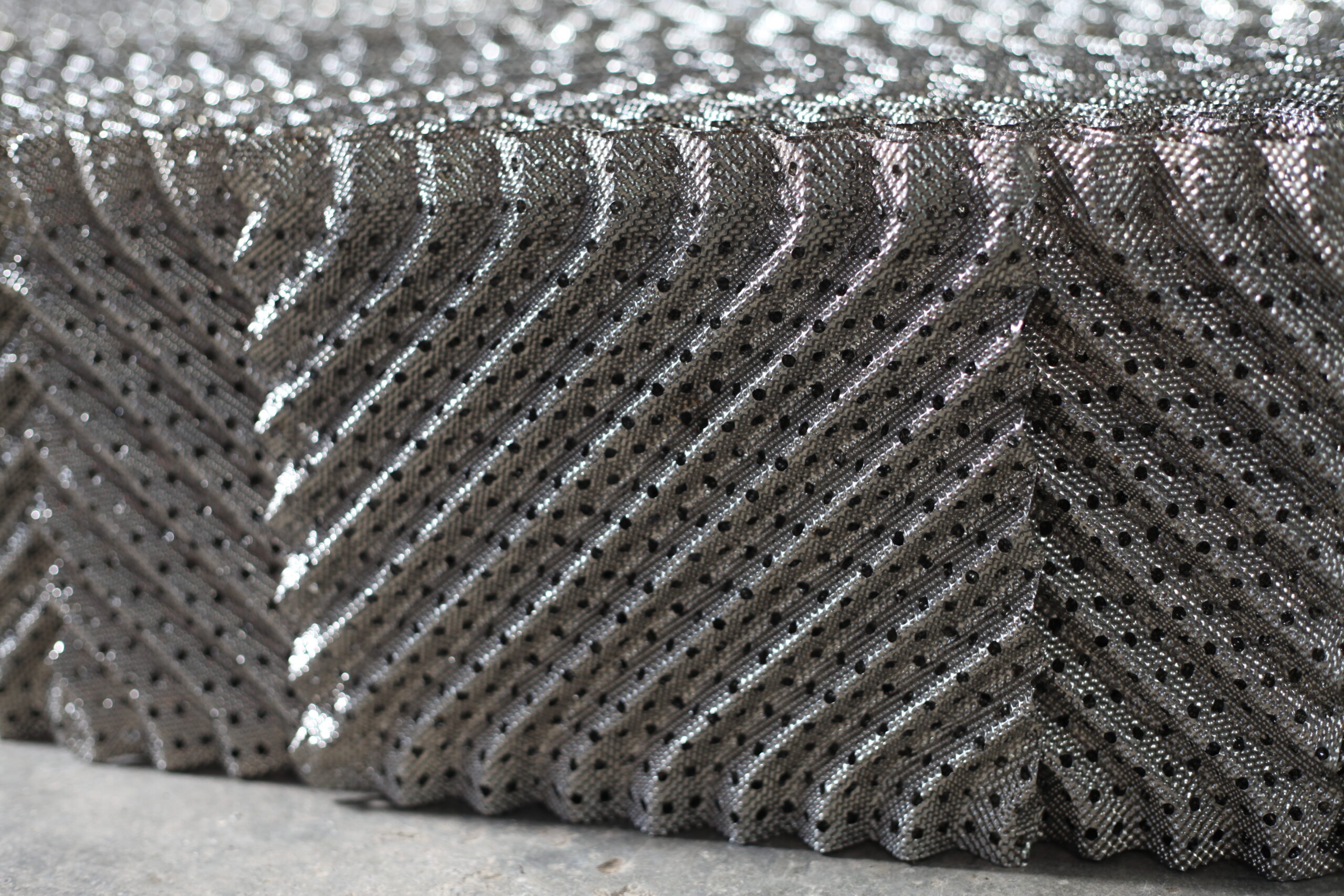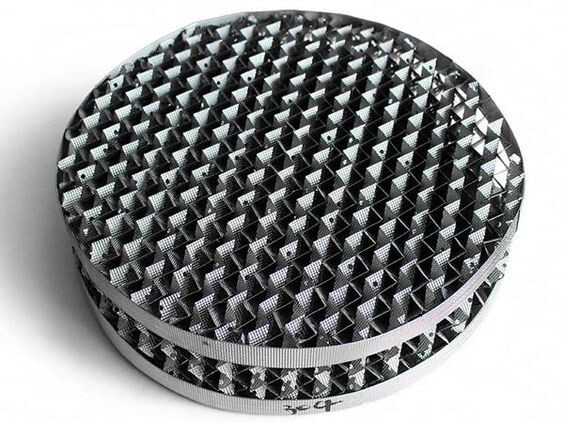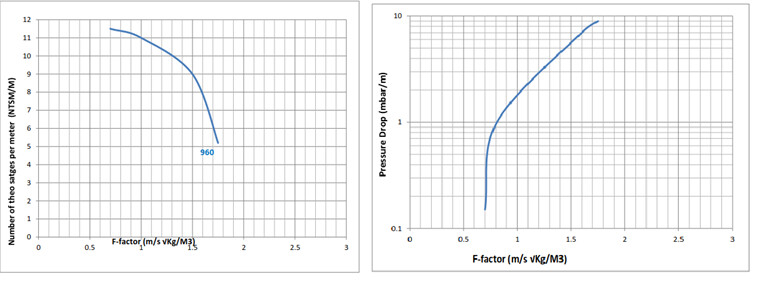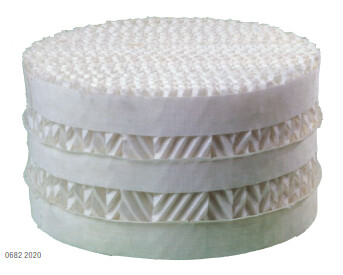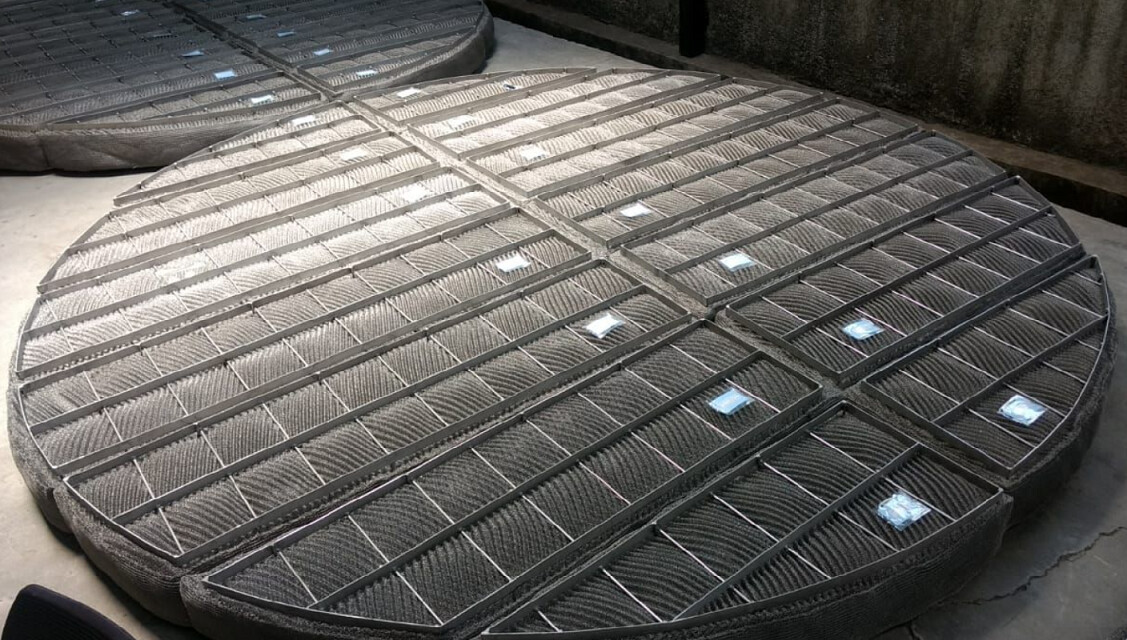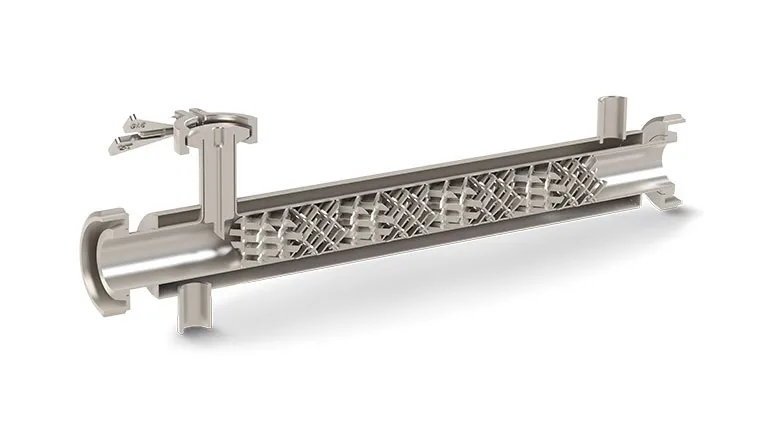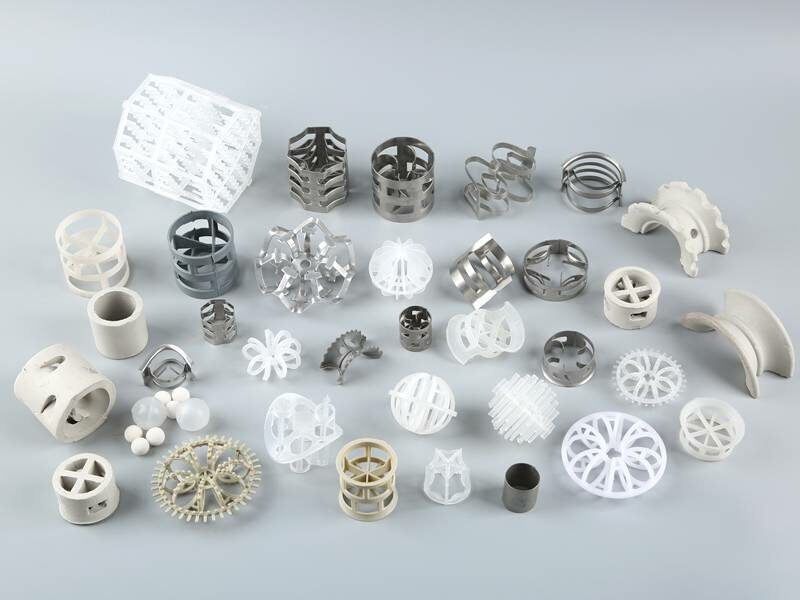



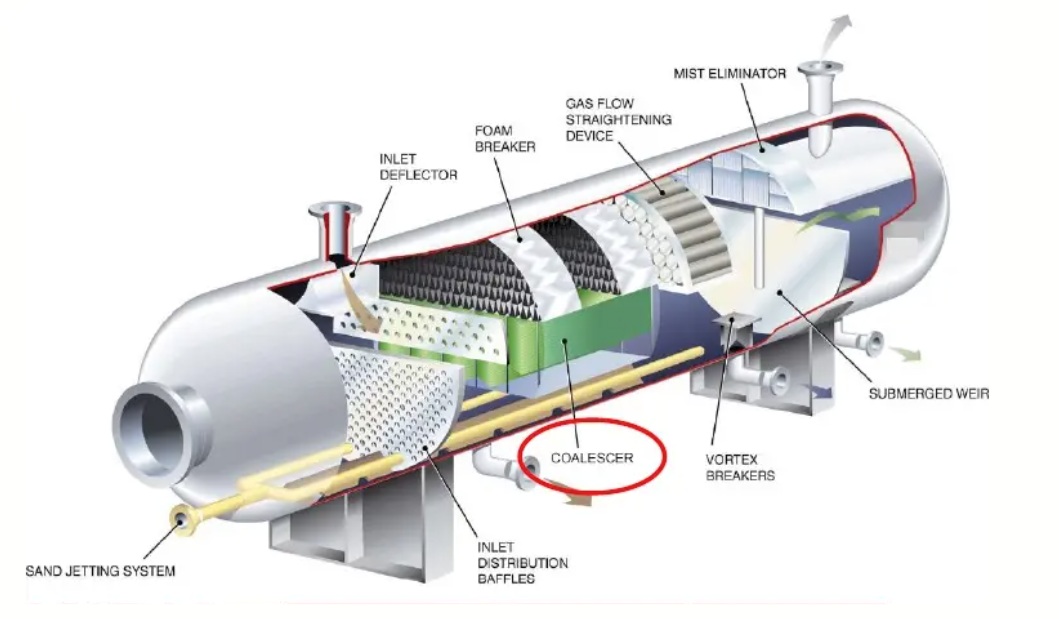
The development of structured packings falls into the early sixties when the first fabric packings of type BX and CY were applied. These packings made it possible for the first time to carry out demanding separation tasks and to separate heat-sensitive substances by distillation. Another milestone was the development of structured packings, e.g. of type Mellapak in the seventies by the company SULZER. Originally conceived to cover a moderate range from vacuum up to atmospheric pressure, structured packings opened up new and unforeseen perspectives in all areas of extensive heat and mass transfer.
Laboratory and gauze packing types EX, DX / BX and CY
Standard structured packing is not very suitable for use in laboratory columns with a diameter less than 50 mm. Laboratory packings are specifically designed for this purpose. Their main advantages include minimal pressure drop.
Usage:
Laboratory columns from 20 to 80 mm
– Vacuum of 1 mbar
- If a large number of theoretical floors (DX, EX) is required
– Distillation of components prone to decomposition
– Preliminary assessment of the separation task
Exemplar
– The highest theoretical number of stages, with very low liquid loading
Small detention
– Almost double the capacity of wire mesh (3 x 3 mm)
Type DX:
This packing has a coarser structure and therefore a lower theoretical plate count. It is suitable for laboratory columns where a lower number of theoretical plates is required, along with low pressure drop and high capacity.
Traditional structured packing
Structured packing is the most widely used structured packing worldwide, owing to its unique hydraulic and transport characteristics. It has a proven record of excellent performance in columns up to 15 m in diameter.
Features:
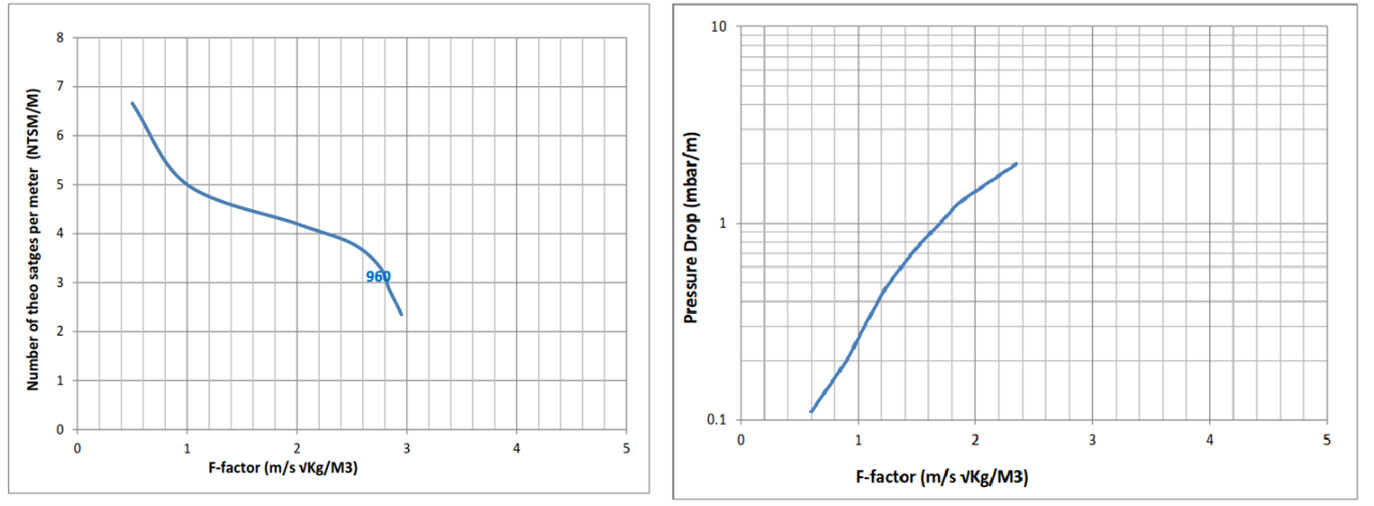
– Pressure loss per theoretical floor 0.3 1.0 mbar
– Pressure loss at 70 80% flow rate: approx. 2 mbar/m
– Minimum spray density approx. 0.2 m3/m2h
– Maximum spray density up to over 200 m3/m2h
High-Capacity Packing
High-capacity packing, such as the MellapakPlus type from SULZER, represents an innovative, structured packing. It typically has a capacity 25 to 30 per cent higher than conventional structured packing, thanks to the geometric design of the individual segments. The main advantage of this geometric design is that the vapour flow smoothly changes direction. At the interface, the vapour flow is almost parallel to the vertical axis of the column. The gas velocity is therefore approximately 25% lower than the velocity within the packing. Both of these factors also result in a reduction in pressure drop.
Within the internal part of the packing element, the geometrical properties of MellapakPlus and Mellapak are identical. The separation efficiency is therefore similar – but with a significant increase in capacity and reduction in pressure drop.
Plastic packings and ceramic internals
Plastic versions of structured packing have proven effective in various types of absorption and stripping columns. Packing manufactured from PP, PVC-C, PVDF, Teflon® PFA and PEEK can be supplied.
Plastic gauze packings have been used industrially with great success for many years. The special gauze structure provides very good wettability, even in aqueous systems. This packing is primarily used for low liquid load columns.
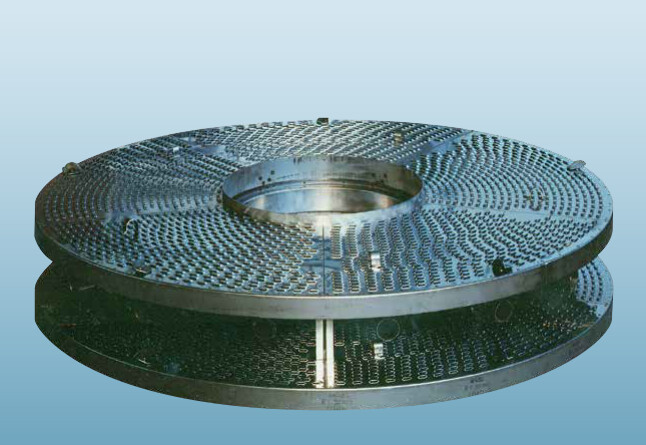
Grid layout
In the Grid-type packing, the efficiency of structured packing is combined with the mechanical resistance of the grid. This type is used where the mechanical strength of structured packing plays a role, or in areas where coking occurs to which it is not sensitive due to its geometric structure. Specific surface area from 40-90 m²/m³ with a thickness of 0.5-1.6 mm in many material designs.