


Trays find long-term use for many applications in both the chemical and refining industries. The liquid phase flows downwards through the tray column in a cascade, while the vapour phase rises upwards and bubbles
a liquid layer on each tray where interphase contact between the vapour and liquid phase occurs. The liquid that flows to the bottom of the column is partially evaporated in the reboiler and the vapours are sent back to the column.
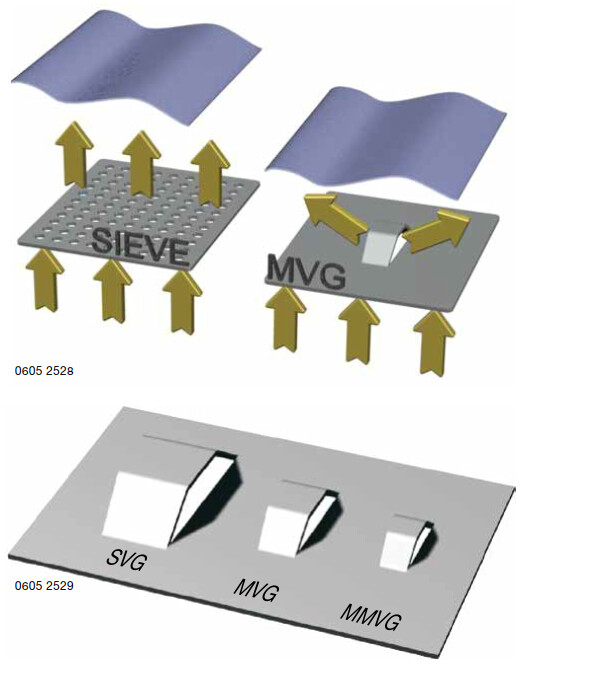
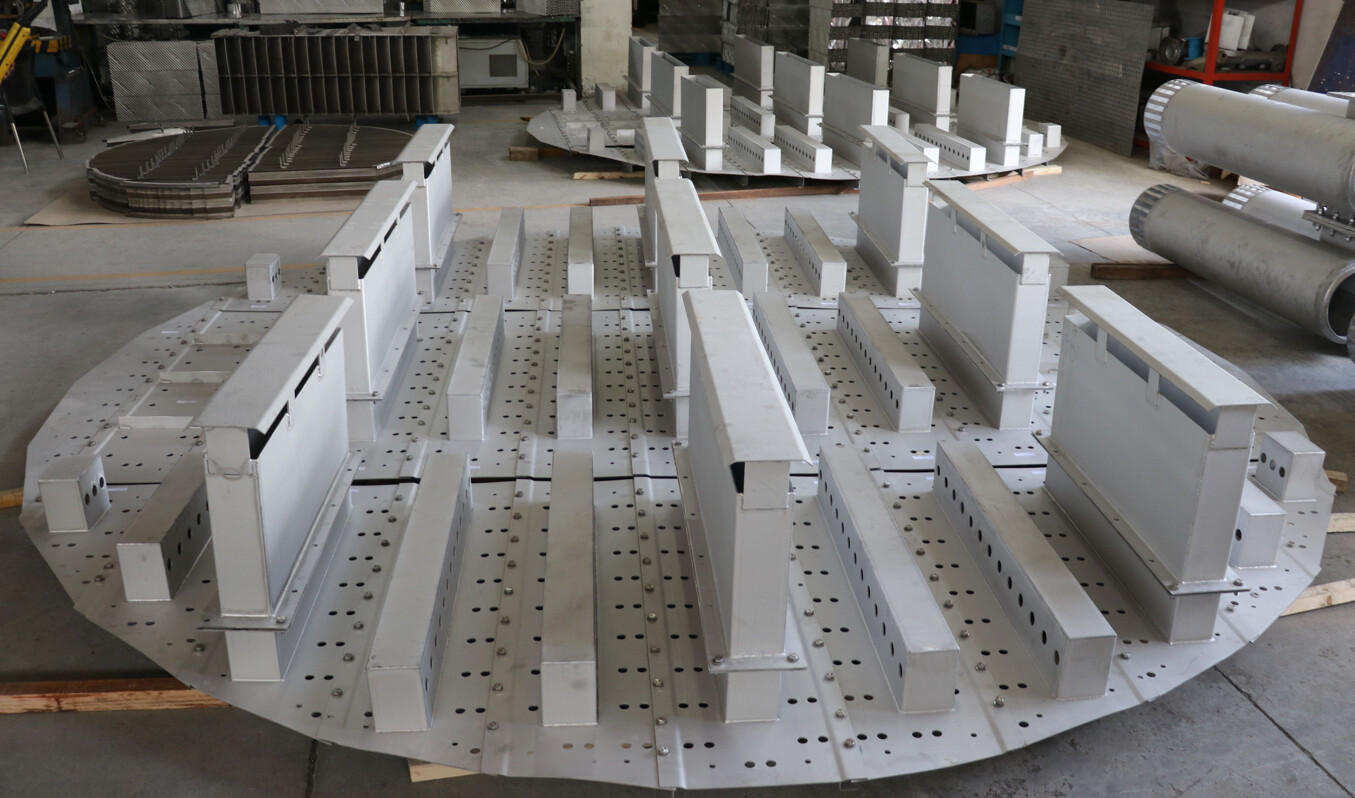
Bridge floors
The main advantages of a bridge deck include:
High efficiency over a wide operating range due to improved steam-liquid contact.
Excellent mechanical resistance thanks to increased platform strength.
No moving parts, so no wear and tear.
Smaller stages offer higher capacity than larger ones due to lower pressure loss. MVG bridges provide higher capacity than standard grid stages with higher efficiency and lower pressure drop per theoretical stage.
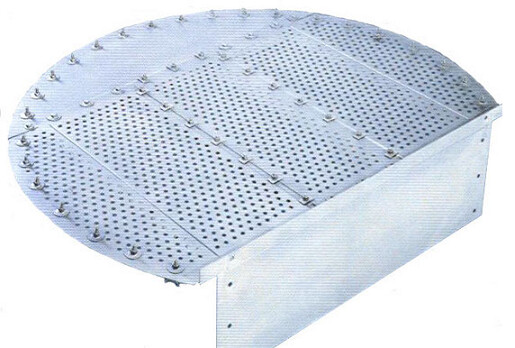
Network floors
Tray floors are particularly popular for their low-cost design. They find wide application in both chemical and refinery processes where a large operating range of the liquid phase is not required.
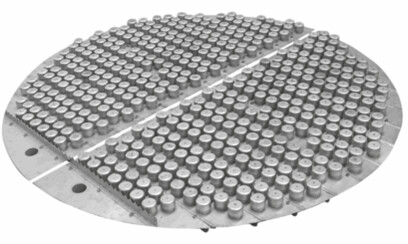
Hat floors
Plates with openings covered by caps that force steam to bubble through liquid. The caps have various shapes; more common types consist of a circular cap inverted over a steam orifice of a smaller diameter than the cap. The edge of the cap, which is just above the plate, is provided with cut-outs to ensure that steam bubbles as evenly as possible through the layer of liquid.
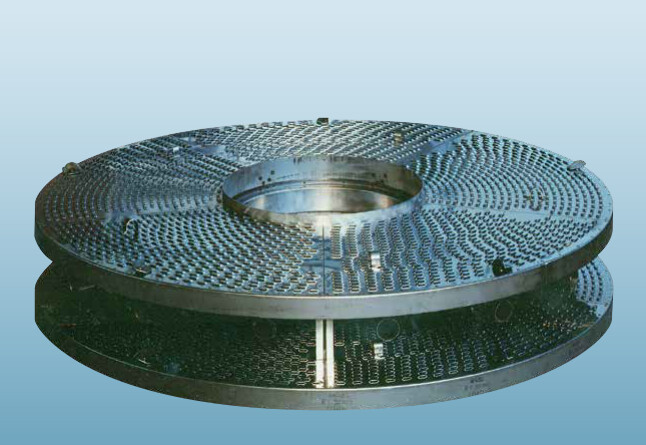
Slit Tray:
The Slit Tray is a highly efficient device with circular symmetry that contains rows of concentric slits for vapour passage. It is mainly used for the distillation of aqueous systems and specialty chemicals.